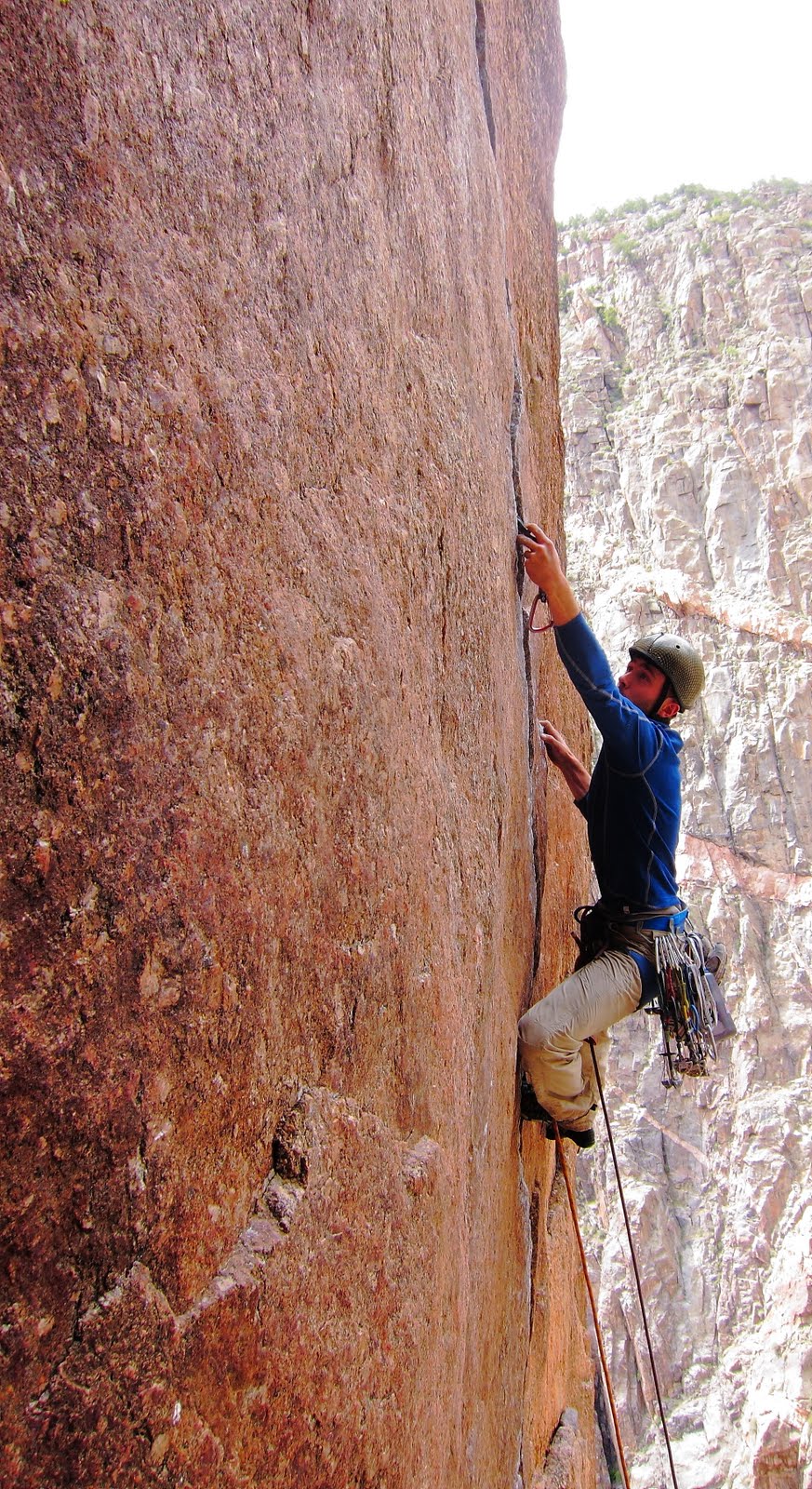
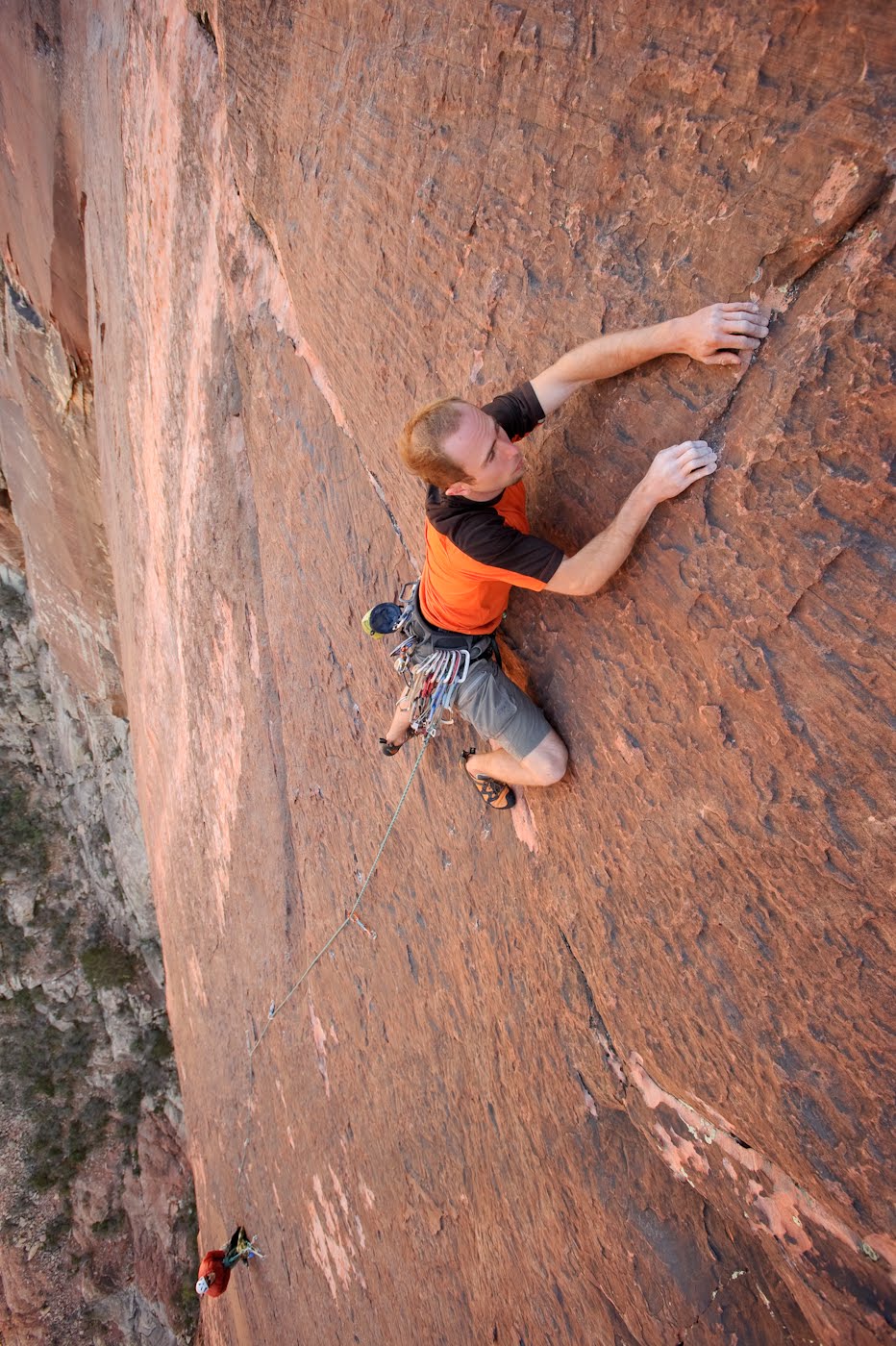
I just returned to Colorado from a 2 week vacation to the Coast Range, climbing with my friend Nate Farr. We were on the British Columbia side of the Alaska/Canada border, about 50 miles East of Petersburg, AK and in an area that had likely been visited by just two climbing groups, one in 1967 and one in 2003. We managed to complete 2 new routes, got shut down by 'rock' quality on Mt. Ambition, and had an amazing trip. I'm busy back at work in Denver, but will be writing about the numerous non-climbing cruxes and unforeseen challenges we faced. We built a pair of boots, and had a very 'creative' food menu due to an aerial food drop that turned into more of a carpet-bombing mission.
In the mean time, here are a few photos from our excursion. Thanks a million to the American Alpine Club and the Mazamas climbing club of Portland for the grant money which help fund our expedition.
Checking in from the North Pacific Seaplane base of Tattoga Lake, British Columbia, I have to post a cool video my friend Graham Zimmerman crafted about our new route, established last week, on the Northwest Face of Chiefshead Mountain in Rocky Mountain National Park. This wall is notorious for tough routefinding and long runouts. We were happy to do the line ground-up, onsight, and without the need for bolts. I've found that not owning a drill or knowing how to use one has significantly reduced the time spent bolting on new routes. There's potential for a couple excellent variations, so check out Graham's video and get on it!
July 20th was my fifth consecutive Tuesday spent in Rocky Mountain National Park going climbing on the high peaks. Two weeks ago, I climbed Birds of Fire on the Chiefshead Mountain, which is a fantastic route, but follows a mostly bolt-protected line. Last week Scott Bennett and I climbed the Diamond face on Long's Peak (my first time on the mountain) and carried our sleeping bags over to Glacier Gorge, where we bivied at the base of Spearhead Mountain. The following day we did all but one pitch of Stone Monkey on Spearhead, before a hail storm scared us off. And in my trips to this beautiful little cirque, I noticed an appealing line of corners and cracks on Chiefshead, just left of our line of ascent. When I found out that the line was apparently unclimbed, I was determined to give it a go before leaving for Mt. Ambition on 7/25...
I went back to Rocky Mountain Nat. Park this week with Scott Bennett, intent on trying to cram even more climbing into a car-to-car outing. We planned to climb 5 spires in two different valleys. Here's my amateur attempt at a video of our day.
1x 70m 9.7mm rope 2x approach shoes 1x light axe and aluminum pons (did not need) 1x set wires 1.5x set cams to #3 1x long sleeve, wind shirt, and toque ~15 hours round trip Zowie is an adventure
Three years ago, my friend Darin Berdinka got me up at some ungodly hour of the morning (night) and we drove from Bellingham to Darrington, WA for the 3.5 hour approach to our linkup of Roan Wall and Salish Peak. The day was unforgettable, and I distinctly remember looking at my watch at 9:30AM, 700' above the valley floor, realizing that my friends and roommates were sitting in class or just waking up, while I was in an entirely different world.
Since then, I've done a big day around the solstice, and this year was the 4th in-a-row.
This year, Josh Thompson and I climbed the Sabre Spire, the Petit Gripon, and the Sharkstooth, all in Rocky Mountain National Park. These spires are shown above. Excellent weather and perfect rock made the day a blast.
Long days always present a planning and logistical challenge, especially when dealing with some snow, and carrying all of one's gear up and over a route.
I went fully Jens-Holsten-style backpackless, with the 70m rope worn as a pack, and my harness (waist loop only) worn from the car. This method has been perfected by my friends Jens and Sol Wertkin for their single-day Stuart Range linkups, and it lets the leader climb packless, which is oh-so nice. For a day like this it was the way to go. Big pockets for snacks and a stocking cap for warmth certainly helped.
People have been climbing on these spires for a LONG time, as evidenced by the copious amounts of archaic fixed gear.
Random tip of the day: When you have to clip shoes or a jacket onto your harness for a hike, or the climb, clip them in through the middle of the shoes, not the end. This will prevent them from swinging back and forth, or hanging down to low, and keeps them in closer to your body for climbing.
Here's Josh negotiating yet another rapidly-melting descent gully.
Ah 5.10, the iconic grade of so many stellar climbs. The level was once considered impossible, and is now the namesake for a brand of footwear. 5.10 is attainable to the motivated weekend climber, but attention-getting and serious enough to inspire even the most dedicated. Routes at this grade in the mountains are 'the real deal.'
With summer around the corner, it's time to fill out the alpine tick list. So in no particular order, here's my personal list of the 10 best 5.10 routes in the Cascades.
In the last couple weeks I've made two trips to the Black Canyon of the Gunnison National Park, climbing with some great folks. The older routes there have very soft commitment grades, but newer ones seem more in-line with reality.
First off was Trilogy with Jason Nelson. The route has 100 meters of low-5th climbing, then 5 plumb-line pitches of solid climbing from 5.10 to 5.12-, then a long pitch of mid-5th class to the canyon rim. We hauled a small bag, which was actually a fun way to do the route. It allowed us to have lots of extra clothes, no shoes on our harness, good food, and it was a vertical plumb line, so the hauls were easy.
Route Beta: The 'R' rated climbing on p1 is a traverse out to the arete. It involves some up-and-down shenanigans and wouldn't be too great to fall off for the leader or the second climber. However, it's probably 5.10-. The 5.11+ crux has bolts much closer by. The long crack on p2 is sustained 5.11, without any real definite crux. On P4 I hung in the flaking pegmatite crack below the bolt. The 5.12- crux is weird. We found the section up-to and past the bolt, to be easier than the start of the pitch. The pro is good either way, but I think the crux might be before the bolt.
Take a double set to #3, and one #4.
Jason on p1 arete - Weird angle, the haul line at right is pointing straight down.
Stemming out some cool moves on the start of p3 of Trilogy
With Nate Farr, I climbed Atlantis (fairly graded a grade IV). We found the day fun and long, but the route wasn't quite as high-quality as we'd hoped. It's not on par with the Scenic Cruise. However, running out of water on p8 (of 16) when the whole route is in the sun probably fried our brains a little.
The Atlantis Topo, courtesy of my friend Evan Stevens. If only our hand-drawn reproduction of this hand-drawn copy had looked so good after 16 pitches in-an-out of a sweaty pocket.
I'd suggest 1x blue alien, then 2x gear from green alien to #3 camalot, then 1x new #4 camalot. You can get buy with only 1 #2 ans #3 camalot, but it makes belays slower and more creative, so probably not worth the trade-off.
Nate on Atlantis:
Nate and I also climbed Journey Home. Journey's a great ~.10a climb for someone who is really confident on the grade. The first pitch has some major leg-breaking ledge fall potential, with the hardest moves right off the ledge boulder. A yellow alien placed in an arch up-and-right can partially mitigate the danger here. The subsequent 4 pitches were well-protected and excellent. We bootied a "fixed" nut from the route (sans nut tool) that I traded for dinner. Major dirtbag points. Bring one #4 for the OW on the last true pitch. It's worth having.
Finally, we hooked up with my friend Neil Kauffman from Patagonia for the climb "Escape Artist". Nate led the middle of the climb in one 280' pitch, so we did the route in 4 pitches with some scrambling afterward.
Glancing through Red Rock’s newest guidebook, one notices first ascent information from the 1970s, but few similar details for the park’s newest classics. Officially “anonymous” first ascents are now the norm. And we were keen to learn if these secrecy-inspired shenanigans were worth the trouble. A towering fin of white stone separates the Pine Creek and Juniper Creek drainages. Jason Killgore, Scott Bennett, Garrett Grove and I walked the crest single-file, comparing echoes down either side, and staring ahead at the Jet Stream Wall. Lacking the requisite skill, ambition, and four #00 TCUs for the sandbagged crux of Jet Stream (600’ 5.12c, AKA .13- "abstract stemming"), we set sights on Drifting (500’ 5.11c), a plumb line of patina edges, discontinuous seams, and illegally-drilled bolts.
Intricate face climbing and thin cracks typify the climb, and the easiest pitch of the route is an .11a which surmounts the wall's unmistakable arching roof. But it's not all "clipping bolts on the beach." Bring your gear skills for this one, especially on pitch #2, where an off-the-bat .11c crux leads to 120 feet of continuously intricate cracks, thin seams, and heady traverses. Unlike Levitation 29, Time’s Up, and older nearby routes, topping out on Drifting wont leave the bittersweet taste of bolted cracks in your mouth.
Our fifth day in Red Rock was the first without a recurring fight for the shared belay jacket. I'd brought two pairs of shorts and one pair of pants on the trip. Pride, if not prudence, demanded I implement the unusued 2/3 of my wardrobe. But what was worn as a great choice for the morning's two-hour hike becomes a recipe for disaster.
Photo: Garrett Grove. Don't Steal
I'm on deck to lead the last pitch of Adventure Punks (5.10d, 600'). The route's crux looms overhead. And it's knee-scrapingly, ankle-gougingly wide.I'm always nervous about the ".d" grades, especially on routes like this one. The 'Adventure Punks' were a loose-knit cadre of 1980s hardmen who eschewed bolts in favor of a traditional ground-up style. This attitude contradicted the era's prevailing 'route construction' philosophy, but also lead to some of the park's best and hardest climbs. And as I rack up to lead, I recall how it was the crux offwdith on the group's signature route which nearly put an end to the Adventure Punks.
Richard Harrison had sent the the route's finale with a hip belay from partner Nick Nordblom, one #4 friend, and an apparently more-than-adequate set of brass nuts. Sixty feet of serious 5.10 separated Harrison's stance atop the route from his #4. And when following the pitch, the swami-clad Nick Nordblom violated one of the Adventure Punks' rules. He fell. With no other gear in the pitch, Nordblom pendulumed across wall. The shouts from both climbers filled Pine Creek Canyon and were joined by the metallic "PING" of metal coming undone. Harrison was pulled onto a piton the piton was pulled from the anchor, and both climbers were suddenly dangling from a single 1/4" Rawl which the bolt-shy Harrison had begrudgingly placed.
With courage derived from the presence of cams unavailable to the Adventure Punks, I squirm, squeeze, and chimney my way upwards and into the slot. Moving my chalkbag and #6 out onto my left hip, I walk up my #5 camalot and imagine the scene 27 years prior. Harrison, facing the same squeeze, adjusts his swami until his knot is to the side, places his #4 friend, and begins his epic and unknown runout. I place my big cams, clip the 2 retro-bolts, and finish off the lead. I'm able to claim success, if not exactly style. But hey, Harrison’s rack was a whole lot lighter than mine was. And he was probably wearing pants too.

 I just returned to Colorado from a 2 week vacation to the Coast Range, climbing with my friend Nate Farr. We were on the British Columbia side of the Alaska/Canada border, about 50 miles East of Petersburg, AK and in an area that had likely been visited by just two climbing groups, one in 1967 and one in 2003. We managed to complete 2 new routes, got shut down by 'rock' quality on Mt. Ambition, and had an amazing trip. I'm busy back at work in Denver, but will be writing about the numerous non-climbing cruxes and unforeseen challenges we faced. We built a pair of boots, and had a very 'creative' food menu due to an aerial food drop that turned into more of a carpet-bombing mission.